One of the most robust pillars of any country’s healthcare system is the midwife.
In addition to family planning, they offer 90% of the necessary maternity, neonatal, sexual, and reproductive health treatments.
Survivors of gender-based violence are also supported by them.
When midwives go out to care for women and girls in remote homes and communities during emergencies, they frequently put themselves in grave danger.
on order to guarantee the delivery of vital services that save lives and protect health and human rights, they frequently traverse the most hazardous and isolated areas, such as rivers and bodies of water, on boats.
Midwives are frequently the first responders and last line of defense, even in cases where floods destroy homes and roads, cut off services, and cause infrastructure to collapse.
One of the most economical strategies to lower avoidable maternal fatalities and to react to emergencies is the efficient deployment of midwives.
However, midwifery is still not generally acknowledged as the important health profession that it is.
Midwives are not represented or given a voice in the majority of decision-making processes and organizations.
Chronic underinvestment in midwifery has resulted in poor salaries, a lack of infrastructure and supplies, and inadequate training—barriers that exist during stable times and only get worse during emergencies.
In the face of efforts to permanently eradicate unnecessary maternal mortality, there is a shortfall of around 1 million midwives worldwide.
Cuts to funding
These disparities might sadly affect women and girls in some of the most difficult areas on earth if recent sharp cuts to funding for humanitarian aid continue.
In areas where more than 60% of maternal fatalities worldwide are documented, midwives are already noting an increase in the number of women and baby deaths in conflict areas and fragile environments.
The UNFPA Ghana is supporting the establishment of the Midwifery Centers of Excellence to equip certain midwifery schools and practice regions to meet international standards in order to advance high-quality midwifery education and close the gap between theory and practice in Ghana.
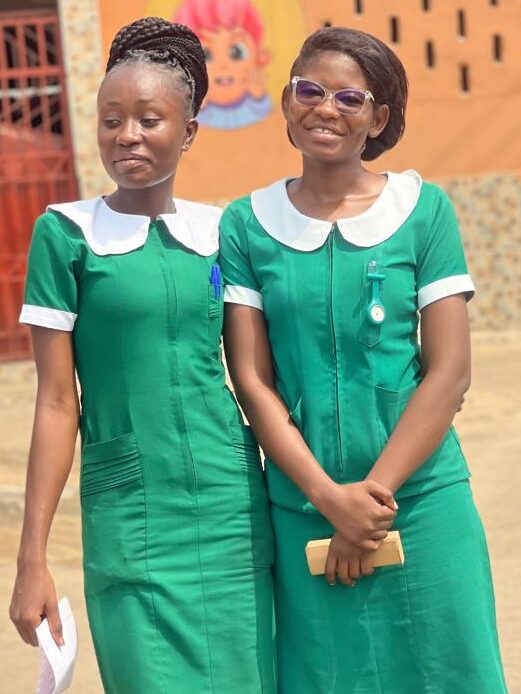
The Kwame Nkrumah University of Science and Technology Midwifery Schools and Korle Bu Nursing and Midwifery Training College have been chosen as the first locations for the Centers of Excellence.
Once more, this year UNFPA Ghana is providing equipment, leadership and governance structure development, and faculty capacity building to the locations.
UNFPA Ghana has collaborated with the Ministry of Health to support the creation, introduction, and distribution of the Third Nursing and Midwifery Strategic Plan (2024–2028), which provides a thorough road map for the advancement of the nursing and midwifery fields in the ensuing years.
Capacity
In 2024, UNFPA improved the quality of maternal and newborn services throughout the Networks of Practice by strengthening the ability of 120 midwives in emergency obstetric and neonatal care (EmONC).
Additionally, UNFPA increased its financial and technical assistance for 60 community health officers and midwives to increase their proficiency with long-acting reversible contraceptives (LARC).
Dr. Wilfred Ochan, the UNFPA Country Representative in Ghana, has emphasized the critical need to improve midwifery in order to shield communities, families, and women from avoidable maternal mortality.
“We make women and entire communities less vulnerable and better equipped to plan for their families and recover from crises by investing in midwives,” he stated.
Through the Midwifery Accelerator project, he urged governments and development partners to work together with UNFPA and its partners.
Every mother and newborn deserve a safe birth, and every investment we make today saves lives tomorrow, therefore we must work together to enhance programmatic and financial investments in midwives and the institutions that support them, Dr. Ochan continued.
Life is saved by midwives. Together, we can eliminate the roughly one million midwives that are needed worldwide and make sure that avoidable maternal deaths are permanently eliminated.
Let’s endeavor to make room on decision-making tables for midwives’ representation, voice, and involvement. By helping midwifery associations come together, let’s strive toward a shared midwifery agenda.
by the UNDP
visit itrotronews everyday for updates
Cool partnership https://shorturl.fm/XIZGD
Cool partnership https://shorturl.fm/FIJkD
https://shorturl.fm/68Y8V
https://shorturl.fm/YvSxU
https://shorturl.fm/68Y8V
https://shorturl.fm/9fnIC
https://shorturl.fm/N6nl1
https://shorturl.fm/A5ni8
https://shorturl.fm/XIZGD
https://shorturl.fm/A5ni8
https://shorturl.fm/TbTre
https://shorturl.fm/5JO3e
https://shorturl.fm/YvSxU
https://shorturl.fm/A5ni8
https://shorturl.fm/YvSxU
https://shorturl.fm/hevfE
https://shorturl.fm/xlGWd
https://shorturl.fm/Xect5
https://shorturl.fm/eAlmd
https://shorturl.fm/PFOiP
https://shorturl.fm/hevfE
https://shorturl.fm/PFOiP
https://shorturl.fm/xlGWd
https://shorturl.fm/VeYJe
https://shorturl.fm/uyMvT
https://shorturl.fm/retLL
https://shorturl.fm/LdPUr
https://shorturl.fm/PFOiP