Sanguli people deal with inadequate cell network coverage by risking their lives for a signal.
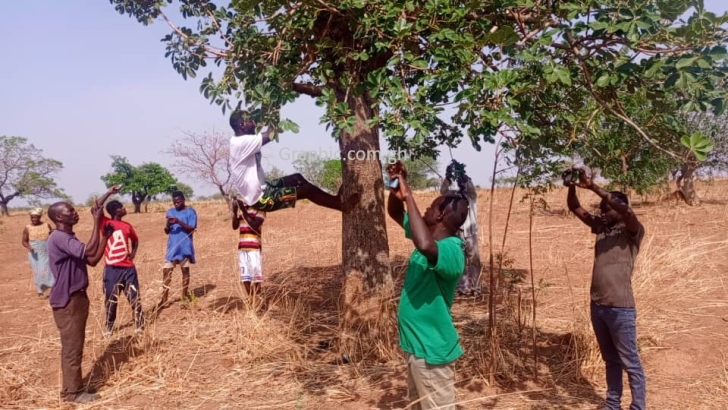
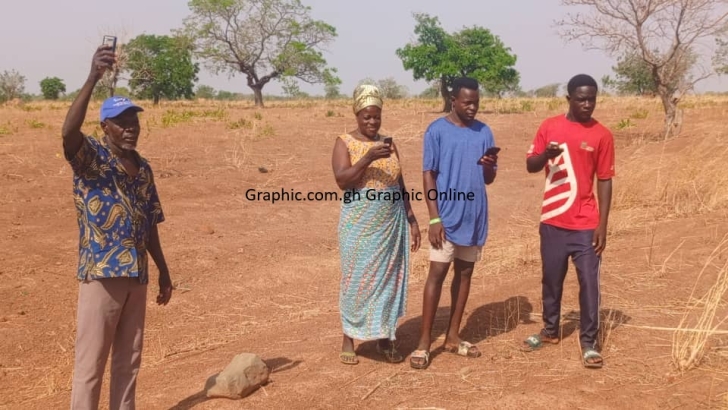
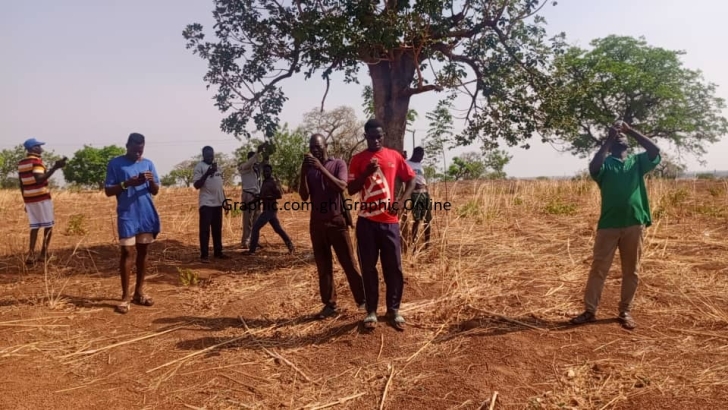
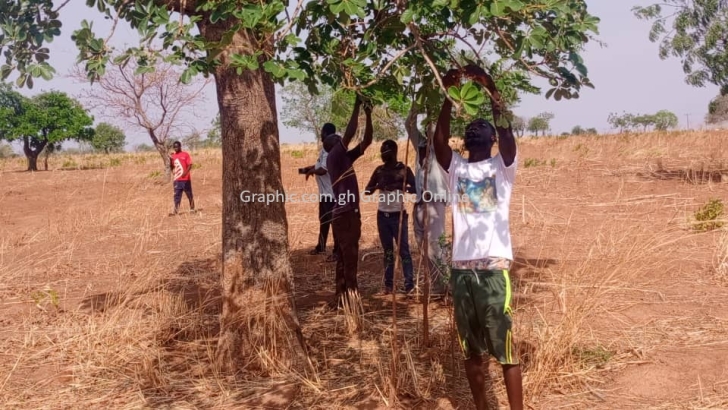
Residents of Sanguli, a rural village in the Northern Region’s Saboba District, congregate under a tree they jokingly refer to as “MTN” on a sunny Sunday afternoon.
However, the tree has turned into their sole chance of picking up a weak cellphone signal, so it’s not for fun or shade.
This location serves as a lifeline for a community that is yearning to stay connected in an increasingly digital environment.
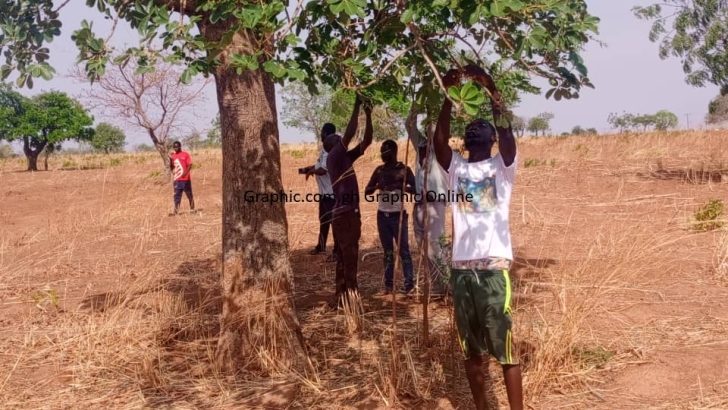
However, the tree has turned into their sole chance of picking up a weak cellphone signal, so it’s not for fun or shade.This location serves as a lifeline for a community that is yearning to stay connected in an increasingly digital environment.
A resident named Esther (not her real name) told Simon Unyan of Graphic Online about her experience.
To transmit mobile money to her brother in Tamale, she would often paddle many kilometers to Saboba town.
Every time she tries to make a mobile money transaction, she has to pay GH¢30 for transportation when her old bicycle breaks down.
“We have to go to a nearby village with a signal even to get a MoMo alert,” she said.
Not only are these frequent, perilous trips on gravel, steep roads annoying, but they are also dangerous.
Community opinion leader Nkunkpakikpe Dalafu recounted a terrible story of a pregnant lady who lost her unborn child because she was unable to seek for medical assistance.
Because we were unable to make emergency calls, he continued, “we’ve seen heartbreaking incidents — women losing pregnancies, others suffering complications, and even deaths.”
Additionally, he said that residents who went into the jungle at night to look for a signal experienced at least 15 snakebite incidents.
Poor network coverage has an impact on schooling as well. Because of the poor connectivity, teachers frequently decline posts to Sanguli, which hinders pupils’ academic progress and limits their options for the future.
A local university graduate named Gmajinbo Daniel described how he lost out on a career chance because recruiters were unable to get in touch with him.
“After that, I had no choice but to rent a room in Saboba just to stay connected while job hunting,” he stated.
The digital divide causes young people to lose out on online education, mobile banking, and mobile money vending enterprises.
It hinders economic expansion, restricts access to innovative farming practices, and exacerbates the poverty cycle.
Another local, Dalafu Emmanuel, drew attention to the North East Region’s lack of a contemporary network tower connecting Saboba and Chereponi. In addition to interfering with communication, this distance makes farming and emergency response more difficult.
“This section is prone to accidents, and obtaining emergency assistance is quite difficult. The majority of us are farmers. Without dependable network connection, we are unable to get in touch with suppliers, customers, tractor operators, and agricultural officers during the growing and harvesting seasons.
Much of our product rots on the farm as a result,” he bemoaned.
About 17 settlements make up the Sanguli Electoral Area, which still has poor or nonexistent cell service. In addition to communication, this has an impact on family life, business, emergency services, healthcare, and education.
The issue is made worse by Sanguli’s closeness to Togo, even with the government’s rural telephone initiative. Phones regularly switch to Togocel, the country’s mobile network, which makes data and calls more costly and challenging.
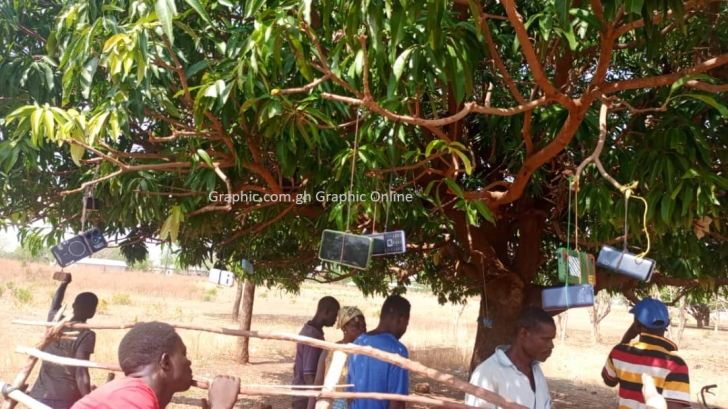
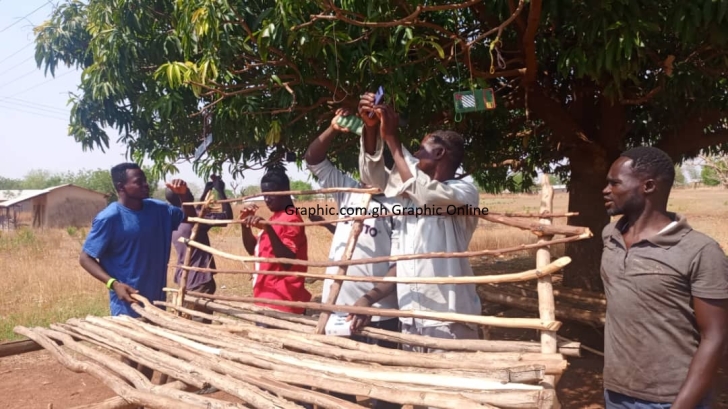
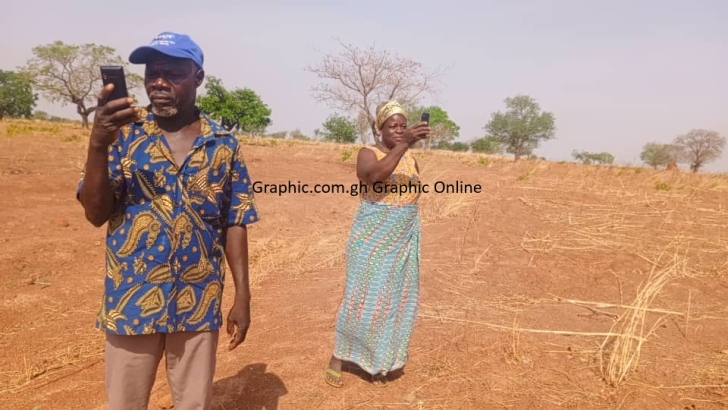
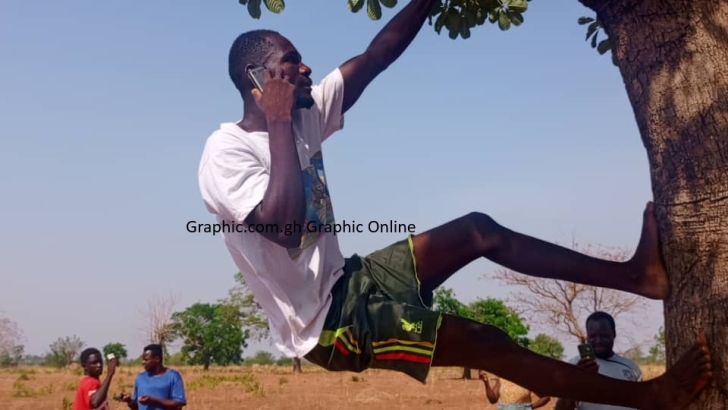
Residents climb trees, hook phones to tree branches, or venture far into the wilderness at strange hours out of desperation. Due to weak coverage, calls are frequently placed on speaker mode when they do receive a signal, compromising privacy in the process.
The Sanguli Electoral Area’s assemblyman, Tilako Timugnee Francis, claimed that despite several requests to the district assembly, not much has changed. The assembly’s temporary rural network booster is still not deployed.
“Connectivity is still questionable despite that intended intervention. We have yet to find a long-term answer,” he stated.
Some materials were brought in one day, but it was simply a short-term solution. Sustainability is our main concern, particularly for a vast electoral region so near Togo. Even lights from Togo may be seen at night, and occasionally our phones connect to Togocel rather than local networks.
In order to stabilize the signal and avoid interference from foreign networks, he urged the government and telecom providers to build a permanent, contemporary telecom tower.
Under its mandate, the Ghana Investment Fund for Electronic Communications (GIFEC) is responsible for expanding telecom access to underserved areas. Yet, communities like Sanguli remain disconnected.
Residents are pleading for urgent action. For them, connectivity is not a luxury—it’s a matter of safety, opportunity, and dignity.
In an era where digital access is a key driver of the Sustainable Development Goals (SDGs), Sanguli’s story is a powerful reminder that for many rural communities, connectivity is still out of reach.
As Ghana continues its digital transformation drive, Sanguli remains excluded—unable to fully participate in mobile banking, e-learning, telemedicine, or e-commerce. The people of Sanguli are simply asking for what many take for granted: the right to connect.
visit itrotronews everyday for updates